The engine is live
Running against its first tenant — the portfolio it was built inside of.
The anatomy behind the thesis: how the three layers stack, what every library document declares, how the numbers roll up, and what one console exchange looks like.
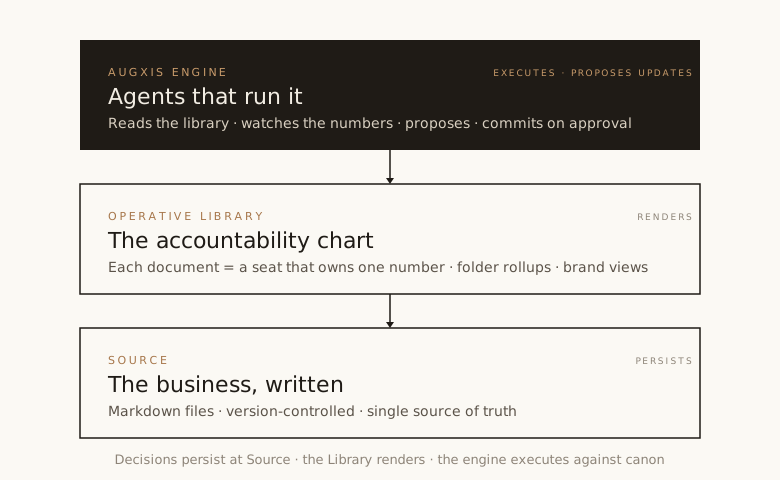
The whole system is one loop: the business is written at Source, rendered as the Operative Library, and run by the AUGXIS engine. Agents never act outside what is written, and nothing they propose becomes canon without approval.
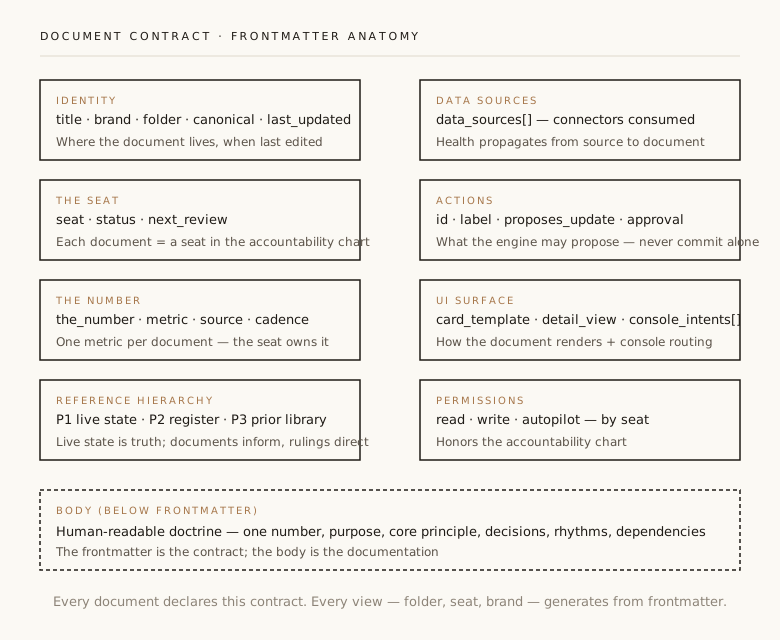
Every document in an Operative Library declares the same frontmatter contract: who its seat is, which single number it owns, where that number comes from, and what the engine is allowed to propose against it. The views — folder, seat, brand — all generate from this contract, not from hand-built dashboards.
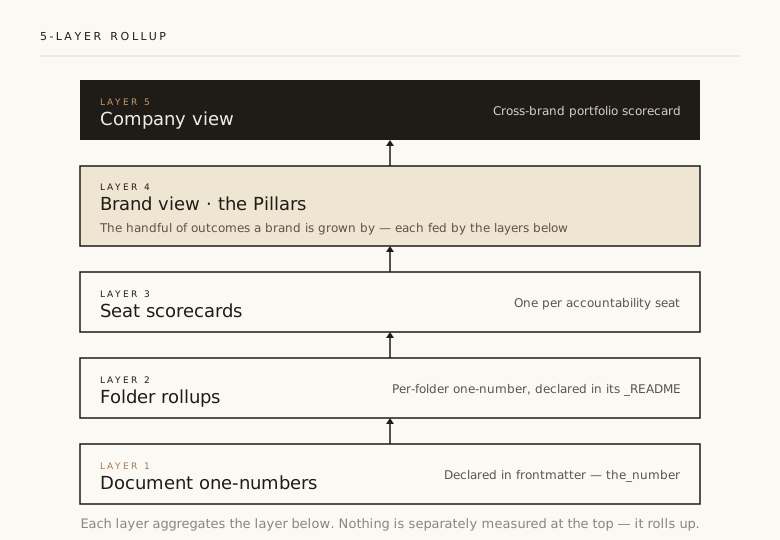
Document one-numbers roll up to folder scorecards, folders to seats, seats to the brand view, brands to the company view. Five layers, one direction. When a number drifts, the drift is traceable down to the single document — and the single seat — that owns it.
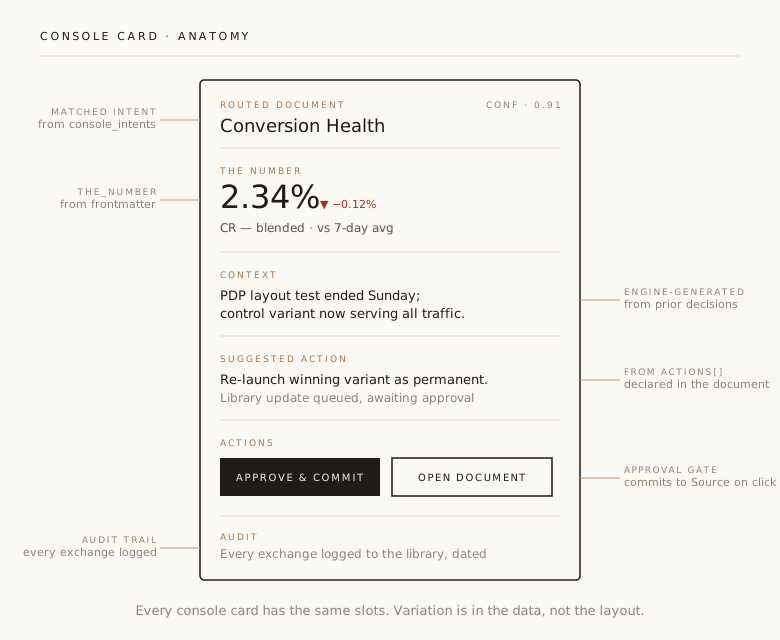
A question routes to the document whose seat owns the relevant number. The card that comes back always has the same slots: the number, the context, the suggested action, the approval gate, the audit line. Variation is in the data, not the layout.
Running against its first tenant — the portfolio it was built inside of.
The approval loop: engine-proposed changes landing as library commits, gated by the operator.
The same architecture re-keys by rewriting the library, not the code. The first tenant replay is queued on our own next brand before it is offered to yours.